Barbara’s family · 11th great-grandfather
John Ruggles "Boston Cattle herder"
1579 – 21 JAN 1656John Ruggles, known in the supplied material as the “Boston Cattle herder,” was an early resident of Boston, Massachusetts Bay Colony. He migrated in 1630, joined the Boston church during the winter of 1630–1631, became a freeman in 1632, and served the town as keeper of cattle from 1642 through 1645. He died by 21 January 1656/7, when an inventory of his Boston estate was taken.
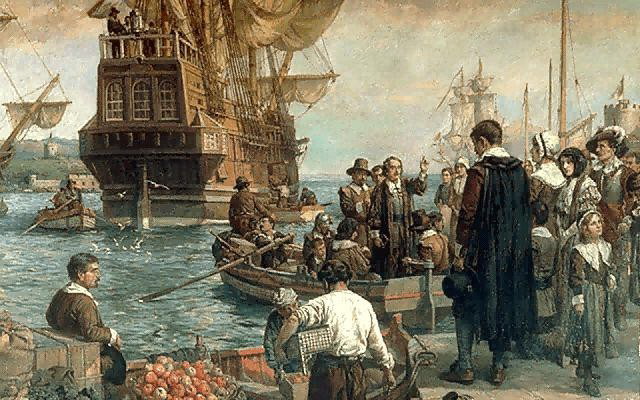
John Ruggles, called the “Boston Cattle herder” in the supplied family material, was an early resident of Boston in Massachusetts Bay Colony. His origin is recorded as unknown. The supplied life dates give 1579–21 January 1656, but the biographical sketch estimates his birth as about 1594, based on an estimated marriage date. He migrated in 1630 and first lived in Boston.John was admitted to the Boston church as member number 129, a placement dated to the winter of 1630–1631. He was made a freeman on 3 July 1632. His wife, Frances, whose maiden name is not known, had been admitted to the Boston church as member number 37 in the fall of 1630. Their marriage is estimated as having taken place by 1630, or by 1619 if Frances was the mother of their daughter.
A daughter, born about 1619, died in Boston around the end of January 1630/1 at the age of eleven. Thomas Dudley wrote that many members of John Ruggles’s family and kindred died during that period, making their losses a matter of notice among the colonists. He reported that the girl, while ill, expressed unusual faith and assurance of salvation for a child of her age.
John’s best-documented work for the town of Boston was caring for livestock. On 25 April 1642, he was chosen to keep the cattle on the neck and was to receive one bushel of Indian corn for each cow for his service. He was also initially selected to take up loose swine, although that duty was soon transferred to Edmund Jackling and Edward Dennis. On 27 March 1643, John was appointed to keep the milch cattle for the following summer, and he was reappointed in 1644 and 1645.
Although no independent record of John’s homelot has been found, he appears as an abutter in several land records, showing that he held a home lot in Boston. In January 1641/2, the town agreed that Captain Gibbons would pay John £7 15s. 5d. for expenses he had incurred in building at Dear Island. In return, Captain Gibbons was to have the present use of the island until the town leased it, after which the town was to repay the amount to him.
John Ruggles was dead by 21 January 1656/7, when the inventory of his estate was taken. The estate totalled £147 2s. 8d. and included a house, ground, firewood, and a bedstead valued together at £10. On the following day, George Ruggles and James Wiseman attested to the accuracy of the inventory. George Ruggles’s role in settling the estate suggests that he may have been related to John, possibly as a brother, but the relationship is not established.
In the supplied relationship path, John Ruggles is identified as Barbara’s 11th great-grandfather through his daughter Rachel Ruggles and her descendants.
Historical context
John Ruggles was among the early settlers of Boston following his 1630 migration. The surviving town records show that Boston assigned residents practical communal responsibilities, including the keeping of cattle, milch cattle, and loose swine. Church membership and admission as a freeman were also recorded parts of civic and religious life in the colony.
Sources & research
The Great Migration Begins, Sketches, entry for John Ruggles.
Boston Town Records, BTR 1:65–66.
Boston Town Records, BTR 1:69.
Boston Town Records, BTR 1:72.
Boston Town Records, BTR 1:79.
Boston Town Records, BTR 1:84.
Boston Church Records, BChR 13.
Boston Church Records, BChR 14.
Massachusetts Bay Colony Records, MBCR 1:367.
Boston Book of Possessions, BBOP 13, 28, 30, 31, 71.
Suffolk Probate Records, SPR 3:62.
Thomas Dudley, letter to the Countess of Lincoln, Dudley 77.
Charles E. Banks, partial reconstruction of the Winthrop Fleet passenger list, published 1930.
Banks, Topographical Dictionary, Topo Dict 154.
“Banks Mss.”, cited by Banks for the suggested origin of Glemsford, Suffolk.