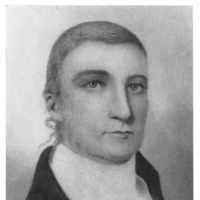
David’s family · 8th great-grandfather
3rd English Civil War POW Col Ninian Edmonston Beall Scottish-English Army
16 SEP 1625 – 1717Ninian Edmonston Beall (reported 16 September 1625–1717) was a Scottish-born Maryland colonist, former prisoner of war, planter, militia officer, assembly member, and landholder. Family tradition and later published accounts place his capture after the Battle of Dunbar in 1650, followed by transportation to Barbados and indentured service in Maryland. He is identified in the supplied lineage as David’s eighth great-grandfather through Hester Beall and Rachel Belt.
Ninian Edmonston Beall was reportedly born on 16 September 1625 at Largo in Fife, Scotland. The supplied family material describes him as having held a commission as a cornet in a Scottish-English army raised in opposition to Oliver Cromwell.According to the family-tree notes, Beall fought against Cromwell at the Battle of Dunbar on 3 September 1650. He was reportedly taken prisoner, sentenced to five years of servitude, and sent with other Scottish prisoners to Barbados. The notes state that he was in Maryland by about 1652, where he completed five years of service with Richard Hall, a planter of Calvert County.
Maryland land records cited in the supplied material place Ninian Beall in Calvert County during the 1650s and 1660s. A 1658 land-office entry records a land transfer by him. On 16 January 1667, he reportedly proved a right to 50 acres for service performed with Richard Hall. The notes further state that he acquired substantial land over his lifetime, estimated there at about 4,000 acres.
The supplied account attributes a long period of public and military service to Beall. It identifies him as Lieutenant Ninian Beall in 1668; as lieutenant of Lord Baltimore’s yacht of war, the Loyal Charles of Maryland, in 1676; deputy surveyor of Charles County in 1684; chief military officer of Calvert County in 1688; high sheriff of Calvert County in 1692; and colonel of militia in 1694. It also states that he served in the General Assembly between 1679 and 1701 and was appointed in 1697 to a commission to treat with Native Americans. In 1699, the General Assembly reportedly passed an Act of Gratitude recognizing his Indian services. The supplied narrative also credits him with a major action against the Susquehannock people; this characterization should be understood as the language and perspective of the later account.
Beall reportedly married Ruth Moore about 1670. She is identified in the supplied material as a daughter of Richard and Jane Moore of St. Mary’s County. The family-tree notes name Thomas, John, and George Beall as his brothers who settled in Maryland, though this relationship is not documented further in the supplied material.
The notes state that Beall was associated with Presbyterian settlement in Maryland before 1690. They report that he supervised the arrival of 200 Presbyterian immigrants from Scotland in 1690, settled them along the Potomac River in a place called New Scotland, and gave land at Upper Marlboro to the Reverend Nathaniel Taylor for a church. In 1707, he reportedly presented that church with a silver communion set made in London.
Beall’s will was dated 15 January 1717 and was probated on 28 February 1717. The supplied material reports that he died in 1717 in Prince George’s County, Maryland. It also gives a reported burial first at his Rock of Dumbarton plantation, at a location later associated with Gay Street in Georgetown, District of Columbia, and lists Oak Hill Cemetery in Washington, District of Columbia, as his burial place. Details in the family notes concerning a later removal of his remains, including measurements and descriptions, are unverified claims from the supplied narrative.
In the supplied relationship path, Ninian Beall is the father of Hester Beall, who was the mother of Rachel Belt. The line continues through Thomas Spriggs, John Thomas Spriggs, Zion Spriggs, Martha Emma Spriggs, Thomas Henry Riza, and Randall Jasper Riza.
Historical context
Beall’s reported capture at Dunbar occurred during the Wars of the Three Kingdoms, a period of conflict in Scotland, England, and Ireland. Transportation of prisoners and indentured servants to Atlantic colonies was part of the labor system of the seventeenth-century English empire. In colonial Maryland, land claims, militia service, county offices, and assembly service were important parts of public life for established landholders. Accounts of colonial conflict with Native peoples often reflect the language and viewpoint of colonial records and later family histories.
Sources & research
George Norbury Mackenzie, Colonial Families of the United States, vol. 2 (1907), pp. 66–68.
Maryland Land Office Records, Liber 5, folio 416 (1658).
Maryland Land Office Records, Liber 11, folio 195 (16 January 1667).
Archives of Maryland, Liber LL No. 11, folio 228.
Supplied Family Tree Maker notes for Ninian Beall.
Supplied family-tree burial listing: Oak Hill Cemetery, Washington, District of Columbia.